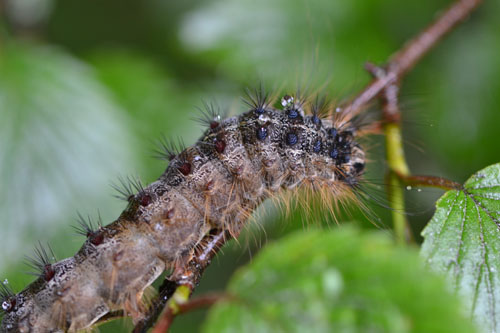
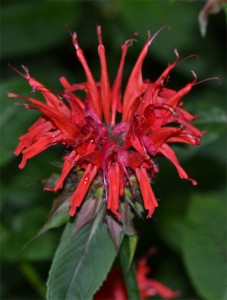
 I know my woodland garden is entering a new phase when the beebalm starts blooming. Summer and humid days are here, the canopy above is much more stingy with letting light through (even the caterpillar damaged twigs are sprouting new leaves), and lush growth is all around. At the same time days are getting noticably shorter already and I can’t help but think that fall is right around the corner.
Beebalm announces my red period, if my garden were art. I have lots and lots of beebalm, mostly the scarlet native variety, but a few cultivars also, with deeper shades of red and even purple. Cardinal flower will soon join the fray. After this comes a prolonged yellow/blue period, up to frost…
Monarda didyma is native to eastern North America and produces beautiful red flower tufts on long stems with dark leaves. It produces a minty aroma, which was recognized by native Americans and early settlers who made tea from the leaves when no proper tea was available. There are other kitchen uses as well: The flowers can be added to salads as a garnish, and the dried leaves can replace oregano in cooking. Its crushed leaves, which have a peppery flavor, can be applied to bean dishes, pasta, pizza and stews as seasoning. However, the main reason I have the plant in my yard is because it is a major hummingbird nectar source.
Linnaeus named the genus Monarda in honor of a 16th century Spanish physician and botanist, Nicolas Bautista Monardes (1493-1588). Monardes never got to see the plant in its environment but was able to study medicinal plants in his homeland since the Spanish controlled much of the new world.
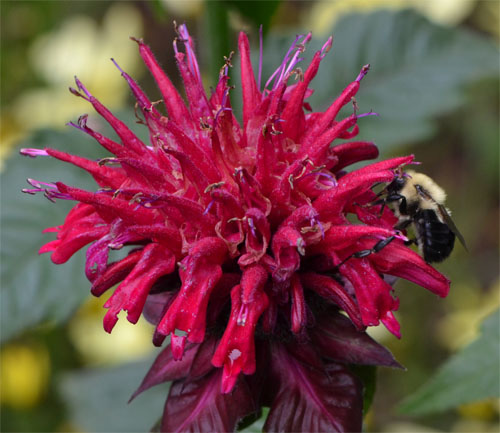
Monarda didyma "Jacob Cline" variety, with bumblebee July 8 2011
Bee Balm is a heavy feeder and a good organic mulch will help keep it going. Also, the plant has somewhat of a habit of dying off in the original spot planted. You should disturb the soil and let it grow back in from rhizomes from outside that location.
Later in the summer, you may need to stake it as it becomes susceptible to being blown over by high winds, especially when in bloom with the heavy flowerheads. You also need to watch out for powdery mildew – this will lead to leafloss. Some cultivars are mildew resistant, or so it is claimed… You can force the plant to produce flowers throughout most of the summer. Cut off the dead flowerhead just above the leaves below it. You will get two new flowers…
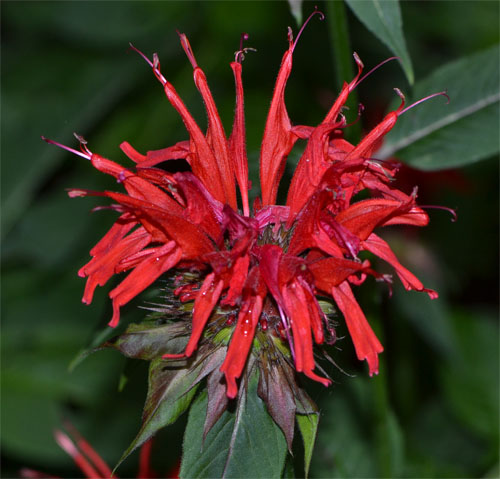
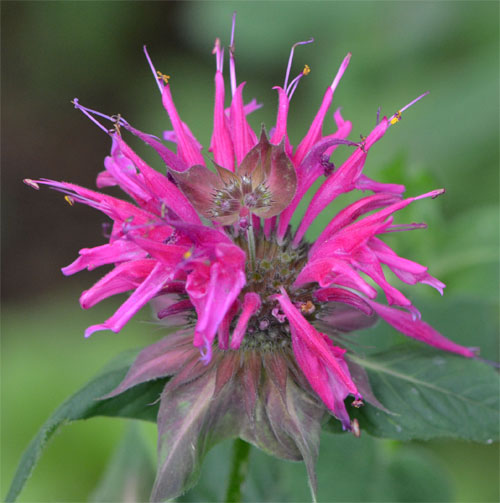
Monarda didyma "Marshall's Delight" July 8 2011
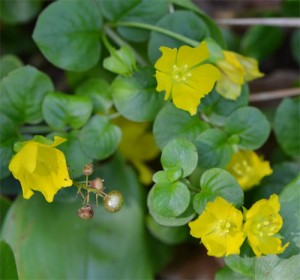 I noticed this flowering creeping perennial at the wildflower garden at the Museum of Natural History. I thought “how lovely” because I had no clue what it was, initially. Moneywort, as this turned out to be, is native to Europe, and was introduced in North America as a horticultural plant. It first got here in 1739. It has escaped from cultivation and spread extensively. Moneywort seeds were sold in the United States as early as 1833, and it was established outside cultivation in the United States by 1900. I am not sure if its presence at the garden was intentional or not, but there it is.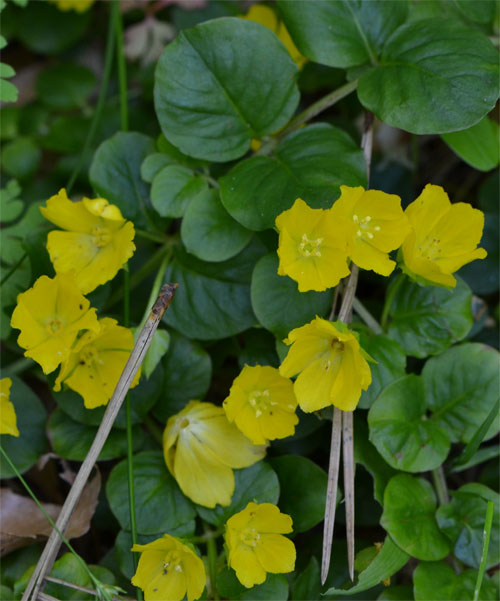
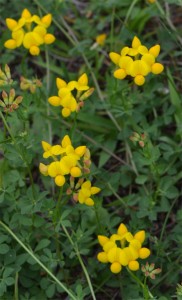 This yellow-flowering perennial is native to Europe, Asia and North Africa, but can now be found worldwide. The name comes from the leaves that seem to be arranged in threes, resembling a flat-footed bird’s foot. In actuality those are just the most visible leaves out of a quintet. The plant will flower until September and will then generate seeds.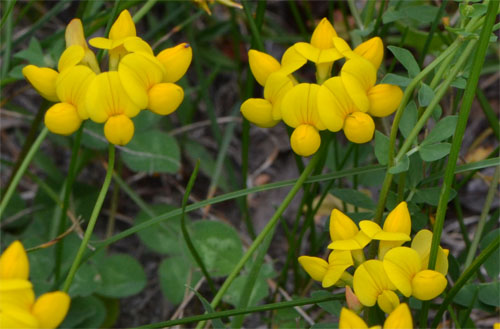
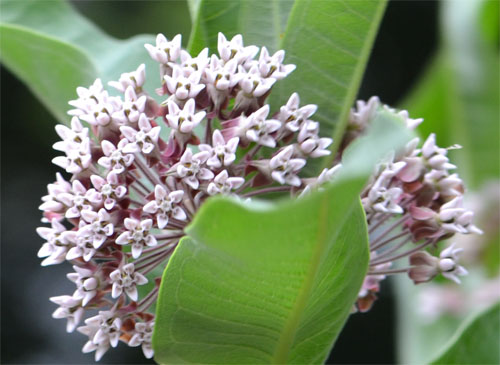
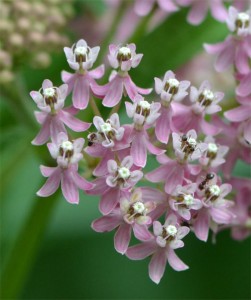 This milkweed is a tall native plant which is usually found in swamps, near rivers, and wet meadows throughout most of the United States (It is not native to the western states). It reaches 3 to 5 feet and is now producing clusters of small, pinkish flowers. These flowers are an important food source for butterflies. The leaves are lancelike.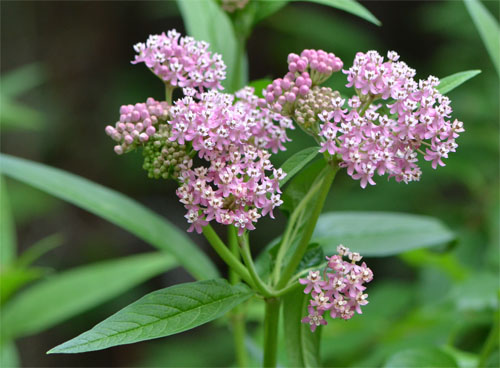
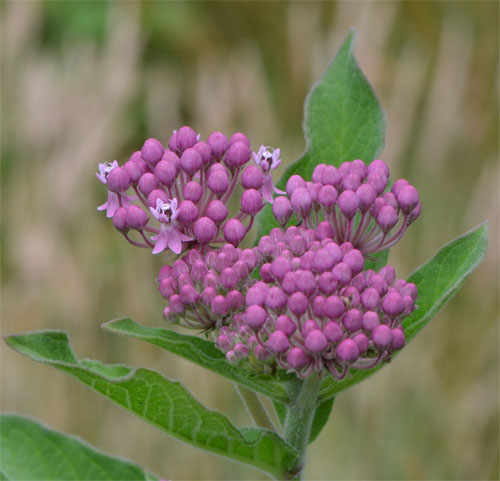
 It’s nice to see these milkweeds popping up everywhere, alongside roads and in meadows. The plants don’t require much tending – they prefer dry well-drained soils and full sun, and will do fine in poor soils as well. Common milkweed is quite drought tolerant. The plant can be grown from seed, and will readily self-seed. Additionally, common milkweed will spread by rhizomes.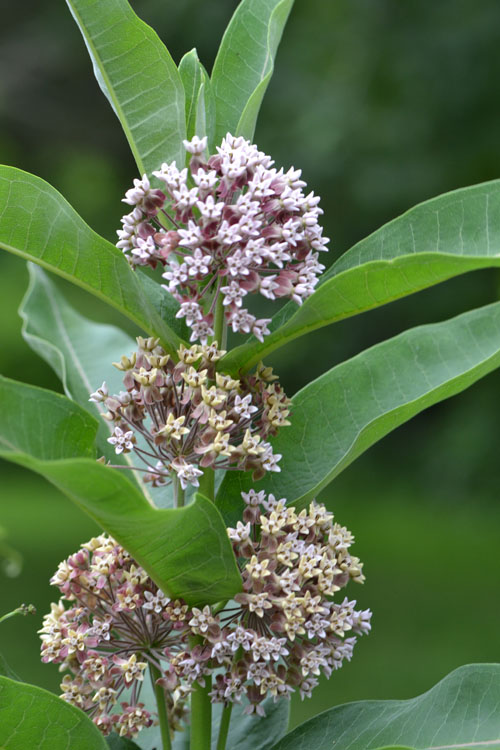
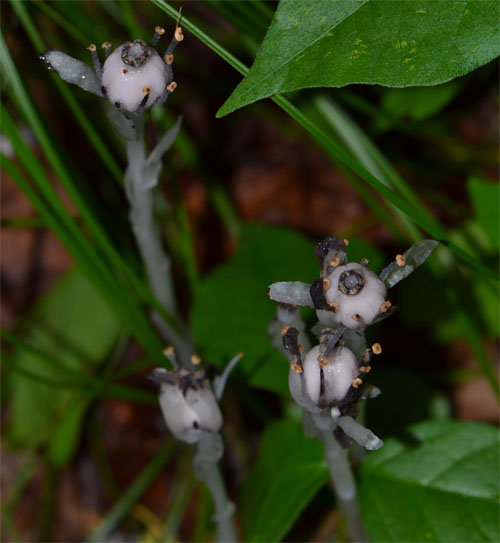
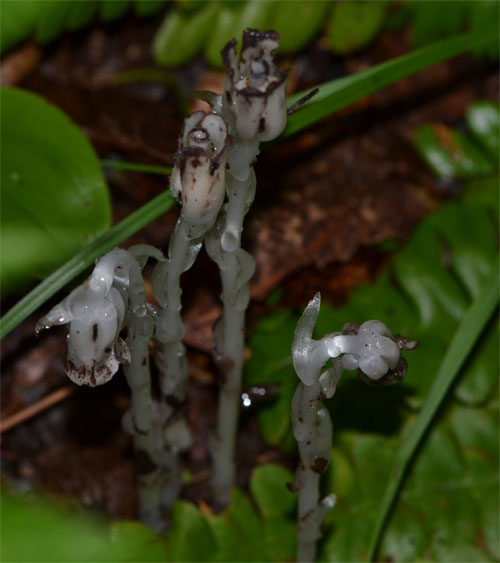
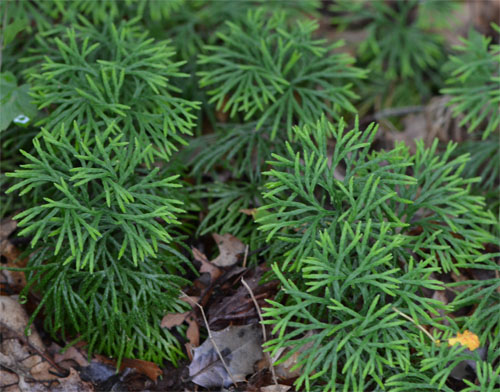
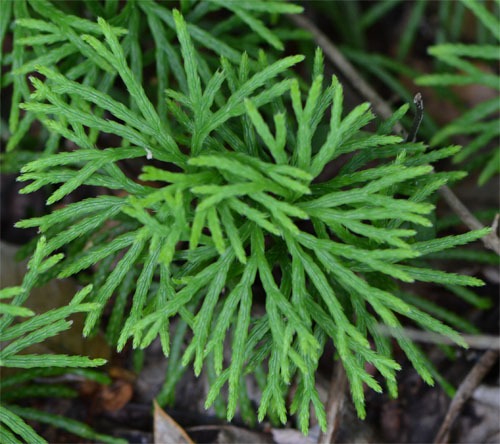
 Myco-heterotrophy, the relationship described in an earlier post about the indian pipe plant, is not so uncommon, and can be found in several different groups of plants. The monotropes, the liverwort Cryptothallus, and non-photosynthetic orchids are full-time myco-heterotrophs. Some plants are partial myco-heterotrophic, and others can switch back and forth, or are myco-heterotrophic at one particular time (Some ferns and clubmosses are myco-heterotrophic in their gametophyte stages).
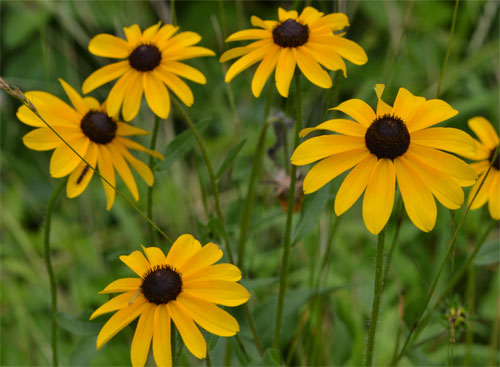
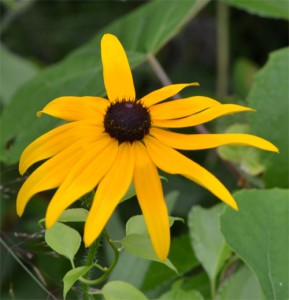 This plant is spectacular when it is doing well. I’ve had mixed results. None of the plants survived from last summer. True – they can be annual or biennal plants, but in some cases or situations they are perennial. I think the drought did them in last year. This year, I had some good strong plants going, until the rabbits discovered them. I believe Rudbeckia hirta is deer resistant, but the bunnies eat leaves as well as flowers – they have the annoying habit of gnawing the stems halfway so the flowers topple to the soil, making for easier consumption, no doubt… I have a few in a flowerbed closer to the house that have remained intact. Blackeyed susan is a must-have though, despite the rabbit problems and the fact that I get contact dermatitis from this plant. It attracts scores of bees and butterflies.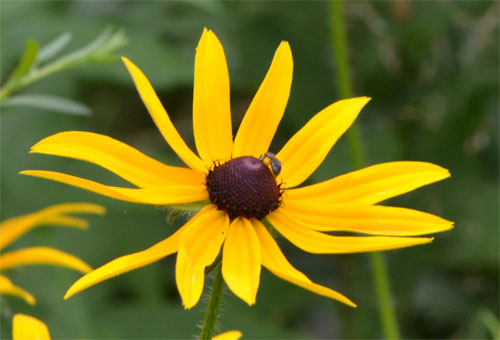
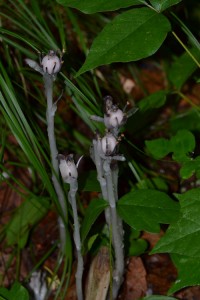 This is one of the more interesting plants on Cape Cod – it has no chlorophyll, and therefore no green leaves, so it cannot obtain energy from sunlight. Instead, it gets nutrients as follows: